The whole baby, treated at every stage of development.

Start here

Where would you like to start?

  • Understand torticollis and the treatment

    What congenital torticollis is, the signs and how TTCAB treats it.

    About the treatment
  • Find a trained professional

    The network of TTCAB-trained professionals and where they work.

    Find a professional
  • Take the TTCAB training

    In-person training for physiotherapists and the upcoming classes.

    See the classes

Treating the body structures altered by asymmetry, in an integrated way, at every stage of a baby's development.

Treatment

Torticollis and asymmetries in babies

Does your baby tend to look more to one side? Do you notice that they keep their head tilted, or move differently on one side than on the other? It is while holding them, at play and in other everyday moments that many families start to notice these differences.

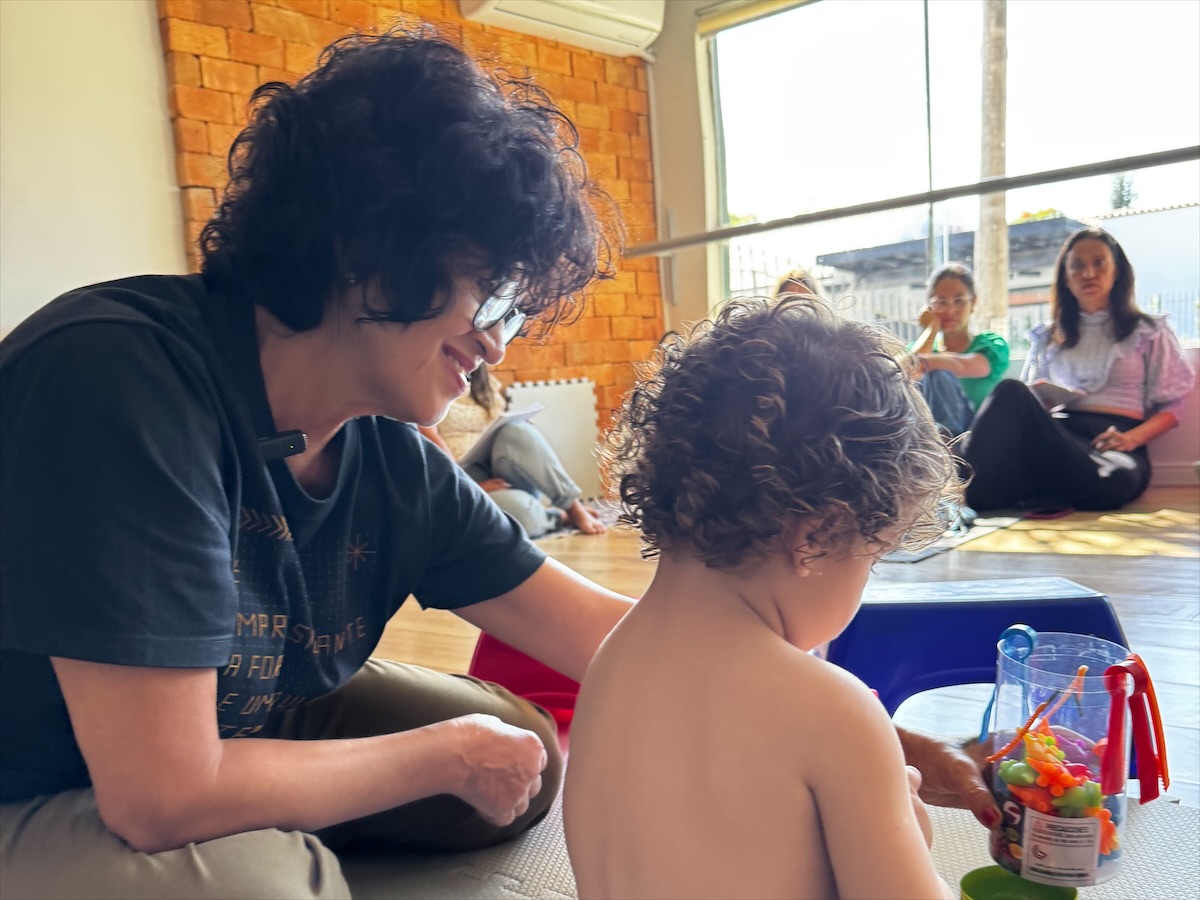
During the assessment, the physical therapist observes how the baby turns their head, bears weight and moves, taking into account the stage of development they are in. Looking at the whole baby helps to understand what the family notices at home and to plan the care they need.

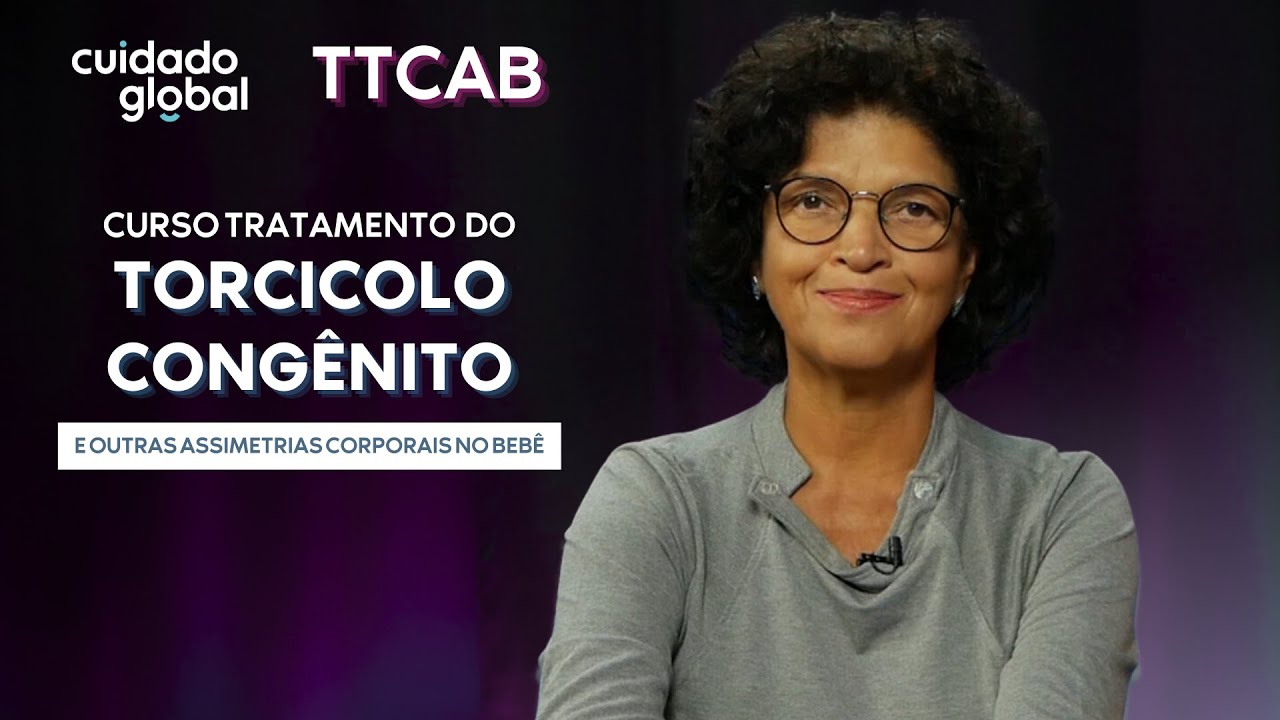
It was from this way of looking that physical therapist Mariangela Pinheiro de Lima created a training course for physical therapists. Its full name is Treatment of Congenital Torticollis and Other Body Asymmetries in Babies. Day to day, we call it by our affectionate nickname: TTCAB.

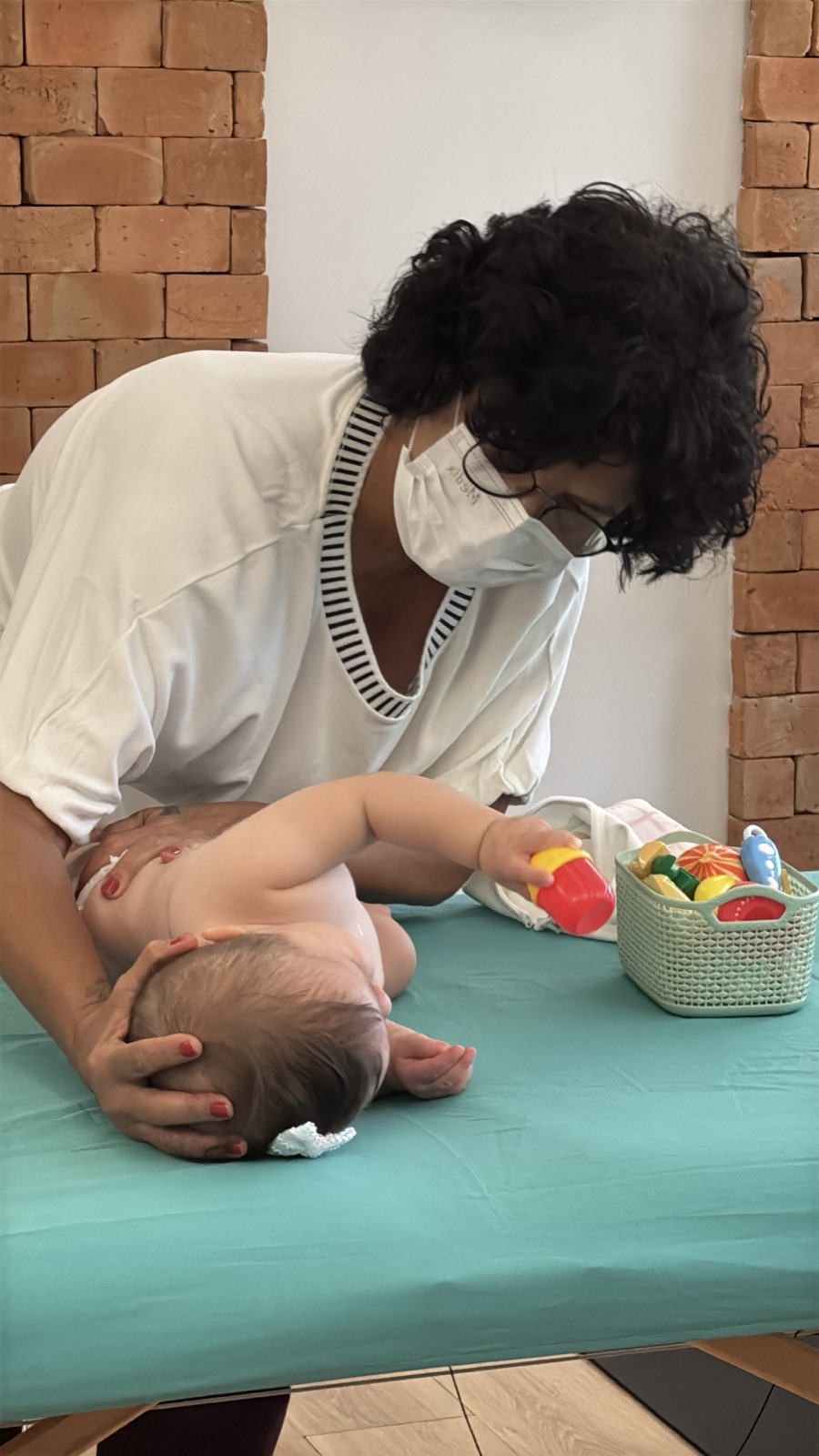
Physical therapist wearing a mask supports the head of a baby lying on the treatment table during a session

Questions from families

Congenital muscular torticollis is described as a postural deformity evident shortly after birth, characterized by lateral flexion of the head to one side and cervical rotation (turning of the head) to the opposite side, due to unilateral shortening of the sternocleidomastoid muscle (SCM), and may be accompanied by other neurological or musculoskeletal conditions.

Source: The American Physical Therapy Association — Academy of Pediatric Physical Therapy

However, more recent definitions state that it should be classified as a developmental alteration, rather than a congenital one, which causes restrictions in the emerging balance reactions, in the weight-shifting strategies needed for changes of posture, as well as in the details of the motor perception of reference for the postural control of movements.

Source: A Developmental Perspective on Congenital Muscular Torticollis — Angela Tessmer, Paula Mooney e Lucie Pelland. Pediatric Physical Therapy, 2010.

Despite having a specific location, Congenital Muscular Torticollis can present with alterations proximal to its location, such as alterations in feeding, visual intake, cervical control, and asymmetries of the head, neck, and arm on the affected side.

It can also compromise the respiratory system, with a reduction of air and muscle volume in the hemithorax on the same side, muscular imbalance of the pelvis, progressive loss of spinal mobility, and global delay of sensorimotor development.

Source: Mariangela Pinheiro de Lima, physical therapist and creator of the TTCAB training.

The diagnosis can be made by the baby's pediatrician and through an imaging exam (ultrasound). Some signs that may indicate Congenital Muscular Torticollis are limited movement of the baby's neck, contracture in the neck muscle (presenting a nodule), and difficulties with breastfeeding, especially on one side.

You can also schedule an evaluation with a physical therapist trained in TTCAB.

Founder

Mariangela Pinheiro de Lima

Creator of the Reequilíbrio Toracoabdominal method and founder of the Escola Brasileira de RTA e Biomecânica Respiratória

CREFITO-10/2894-F

Mariangela has a career of more than 40 years in Physiotherapy, with remarkable experience in paediatrics and respiratory care. She began as a lecturer at PUCPR and worked for seven years at the Pequeno Príncipe and César Pernetta hospitals in Curitiba. She specialised in the Bobath Concept, influenced by Oacy Veronesi and Sherry Arndt. Her interest in Respiratory Physiotherapy led her to create the Thoracoabdominal Rebalancing Method (RTA), taught across Brazil for more than three decades. She also created TTCAB, the training in the treatment of congenital torticollis and other asymmetries in babies.


Testimonials

Success stories

  • Hoje a Lílian é uma criança feliz, que brinca plenamente, que vive a vida muito bem.

    Simone and Marcelo

    Pais da Lílian

  • Não é só a cabeça e sim a biomecânica inteira do bebê.

    Mônica Manhoni

    Fisioterapeuta

  • O TTCAB foi um divisor de águas dentro da minha formação.

    Raysa Araújo Nascimento

    Fisioterapeuta

  • O diferencial é exatamente o olhar, o raciocínio pensado na necessidade daquele bebê.

    Thaíse Kopke

    Fisioterapeuta

  • É um investimento que para mim valeu muito a pena.

    Bruna Santos

    Fisioterapeuta

Training

Upcoming TTCAB courses

In-person training for physical therapists in the Treatment of Congenital Torticollis and Other Body Asymmetries in Babies. Enrollment through the official RTA Method website.

Why do we call it TTCAB?

Our training for physical therapists has a long name: Treatment of Congenital Torticollis and Other Body Asymmetries in Babies (in Portuguese, Tratamento do Torcicolo Congênito e de Outras Assimetrias Corporais do Bebê). Day to day, we ended up giving it an affectionate nickname: TTCAB.

Behind this name is a simple idea: to look at the whole baby and understand how they move at each stage of development.

Mariangela Pinheiro de LimaCreator of the RTA Method and of TTCAB

Shall we care for your baby's development?

Find a TTCAB-trained professional near you.